Connecting Coding Agents to Linear for Task Automation
Linear's coding sessions turn issues into agent tasks with PR review.
Linear’s coding sessions let teams start autonomous coding agents from Linear issues or Slack threads, run Claude Code or Codex in isolated cloud environments, and get pull requests back for review. Connecting coding agents to Linear makes the issue a structured dispatch instruction. For this to help, the agent must keep that context as it works, and the change must pass a review gate before merge.
Why Linear's issue tracker has become a natural agent dispatch layer
Software task context accumulates across issues, discussions, customer requests, related work, and prior decisions. An agent operating outside the tracker usually receives a reconstruction of that context, assembled by an engineer who must decide what to include. That translation is the chronic handoff failure point. Nuance drops, scope shifts, and the resulting implementation can diverge from team intent even when the agent is capable of writing the code.
Linear’s June 2026 launch post describes the gap directly, stating that “an engineer had to take the context from Linear, restate it inside another tool, monitor the work, and bring the result back for review”. Giving an agent more freedom does not restore a constraint omitted from its instructions or a customer report left in another discussion. The engineer remains the bridge between systems, responsible for both reconstructing intent and bringing the result back.
Linear’s design philosophy, “designed for workflows shared by humans and agents”, puts the issue in a different position. It is a shared object with history, discussion threads, customer signal, related work, and team decisions. The architectural shift therefore concerns where context lives and how execution reaches it.
How can teams trigger coding agents from Linear tickets or Slack messages?
Linear launched coding sessions on June 11, 2026, connecting issue context directly to implementation. A team can start one by assigning an issue to Linear Agent or @mentioning it in a comment, Slack thread, or Teams message. Triage automation can also start a session for known issue types. Each session begins with workspace context, including issue details, history, customer requests, related discussions, and prior decisions.
The agent reads the issue and surrounding discussion, investigates the codebase using Code Intelligence, proposes an approach, writes code, and opens a pull request. The work runs entirely in the cloud, so teams have no local environment to set up. The session is shared with the team. Teammates can follow the work, add context, redirect the approach, and request changes in the same thread. Linear’s Diffs puts structural diffing and AI-guided review beside the original issue and discussion, so reviewers can check the change against the request.
An automation tags Linear Agent when an issue is triaged, and the agent investigates through Code Intelligence and MCP-connected tools such as Sentry and Datadog. When it confirms that a fix exists, it opens a coding session, implements the fix, opens a PR, and tags an engineer for review. Teams configure this path in their Triage settings.
For teams enabling the connection, the access requirements are specific. Coding sessions are available on Basic, Business, and Enterprise plans and require a GitHub connection with code access. They consume AI credits. Workspace admins control access, model availability, and credits from the usage dashboard, so delegation remains subject to workspace-level controls.
Choosing the agent harness — Claude Code and Codex inside Linear sessions
Linear names Claude Code and OpenAI Codex as the harnesses used by coding sessions. The harness shapes how the agent uses codebase context, handles branching, and prepares a pull request, so the choice changes how the work gets done as well as how it looks. Claude Code fits careful Git-aware PR work. Codex offers breadth for teams already working within the OpenAI ecosystem, spanning cloud delegation, the Codex app, an open-source CLI, IDE extensions, a desktop app, GitHub integration, and connected ChatGPT workflows.
For teams running agents outside Linear or beside it, Cursor and OpenCode address different requirements. Cursor’s cloud agents run in isolated VMs, where agents work in parallel on tasks that are independent of each other. Its Enterprise feature Cursor Blame distinguishes tab completions, agent runs, and human edits at the line level. That makes attribution a concrete selection criterion. OpenCode instead emphasizes provider flexibility through a permissively licensed, provider-agnostic harness, support for local Ollama servers, LSP integration, and dual build/plan agents.
The durable decision is where the workflow’s context resides. Models and harnesses change, but the issue, its discussion, and its history are still there for the agent to refer to as it works. Teams should separate the context layer from the harness choice, using criteria such as Git-aware PR handling, ecosystem fit, attribution, and provider flexibility.
What the agent needs from the issue to execute reliably, not just start
An issue intended for agent execution needs a clear scope boundary, acceptance criteria or a testable definition of done, pointers to the relevant code surface, and enough customer or error signal to investigate root cause. Without these, the agent has to guess at what is missing. Starting successfully is not the same as executing reliably.
The KAIST/CMU delegation framework found that experienced developers concentrate supervisory effort in planning because downstream correction is more expensive than upstream specification. That finding changes the role of issue writing. For teams delegating implementation, the practical lesson is to write issues as instructions an agent can execute and a reviewer can evaluate. Scope sets out what may change, and acceptance criteria tell the reviewer how to judge the result.
The execution environment must support that specification. Agents need to install packages, run services, execute tests, and verify their output, which makes a shared or under-configured environment a source of unreliable results. Each Linear coding session has its own isolated cloud environment to run in. For multi-agent work, that isolation must also prevent one agent’s dependency installs or file mutations from interfering with another’s work, including when agents use separate git worktrees.
Evidence access complements both instructions and isolation. With Sentry or Datadog connected through MCP, the agent can inspect error traces and performance signals before proposing a fix. Code Intelligence provides access to codebase structure beyond the issue author’s summary. Together, these mechanisms let the agent investigate what went wrong rather than rely exclusively on the author’s diagnosis.
How session continuity and memory prevent context collapse on longer tasks
Requirement understanding, code localization, evidence retrieval, multi-file editing, testing, bug fixing, and regression verification form a dependent sequence. Each step relies on what came before. Without continuity, an agent can repeat completed searches, lose earlier constraints, or contradict decisions made during planning. Linear’s shared session addresses the team handoff dimension by letting teammates contribute context without breaking the thread.
Persistent agent continuity requires a deliberate design as well. For teams building dispatch infrastructure, a durable pattern is a mapping table that ties issue ID, continuity type, and provider to a persistent session ID. Planning, implementation, code review, and PR creation can then resume the same session. The agent reviews against the reasoning it developed earlier. Without that connection, iteration and self-review start cold, detached from the decisions that produced the code.
Large codebases also create a coordination problem within the task. Claude Code’s lead-centric mailbox system gives agents isolated context windows and direct messaging so they can bring together what they know without one agent having to remember everything. Tiered model routing separates architectural decisions from bounded subtasks. A lead agent can use Opus, or another model the user chooses, while sub-agents route to Haiku.
Session memory, however, is not the same as organizational learning. The KAIST/CMU framework identifies “Update Assets” as a key supervisory behavior, turning recurring guidance into reusable instruction files. That is the practical takeaway for repeated issue types. Agents and teammates can use guidance learned in one task in later work, beyond the session where it first helped.
What teams that have built this workflow actually see in throughput and review load
Ramp built Inspect on Linear’s API to connect specifications, customer feedback, and code, and it now writes a majority of the pull requests Ramp merges. Coinbase built Forge on Linear’s Agent SDK, operating across Slack, GitHub, and Linear. Coinbase described Linear as “the place where agents go to get their bearings before starting a task”. These teams still need to review the changes their agents produce.
Stripe’s Minions agents write thousands of pull requests that get merged each week and contain no human-written code. Linear’s internal use also produced a large volume of agent-merged PRs in the month following the June 2026 launch. Its automated workflow resolves a significant share of incoming bug reports, mostly on the first pass. These outcomes establish the scale that agent execution can reach, but merged output alone does not explain the effort required to validate it.
Agents materially improve time-to-PR for bounded tasks such as adding tests, upgrading dependencies, fixing lint errors, mechanical refactors, syncing docs, and handling small bugs. Yet AI-generated PRs wait much longer for a human reviewer than human-written ones, even though the review usually takes less time once it starts. Incoming volume can grow faster than review capacity. Autonomous agents also show the weakest merge completion rates relative to human-only PRs, exposing the gap between generating a change and producing one reviewers can process confidently.
Rising PR output can coincide with rising incidents per PR, so velocity alone can conceal downstream degradation. Elite teams track AI code share, complexity-adjusted velocity, code turnover ratio, and PR cycle time alongside merged counts.
How to govern the review gate so faster dispatch doesn't produce more incidents
Faster dispatch creates asymmetric load when agent capacity expands but human review and testing do not. For developers who use AI very heavily, PR yield can fall even as merge rates rise. Teams scaling this workflow should build the review gate as part of the integration to account for faster generation.
Automated quality gates provide the first control. SAST/SCA integration should be a required check on agent-generated PRs, with dependency verification before merge and mandatory human review for security-critical paths. Teams should specify which codebase areas agents may modify autonomously and which require human initiation, using Linear’s triage automation settings as the natural place to encode dispatch rules.
Attribution makes the resulting quality record actionable. Teams need to know which agent run, harness, model, and credential produced each PR so that low-defect configurations can be distinguished from those producing rework. Recurring guidance should become CLAUDE.md files, project-level configuration, or saved Linear Agent skills, making behavior reproducible across issues and teammates rather than dependent on the strongest individual prompt.
The supervisory workload also needs explicit design. The KAIST/CMU framework maps Plan, Monitor, Wait, Review, Teach, Manual Fix, and Update Assets, and finds that developers manage load through stronger planning and delegation of supervisory subtasks. A reviewer agent or second coding agent can provide a pre-review pass that reduces what reaches the human queue. This complements, rather than replaces, mandatory human review where policy requires it.
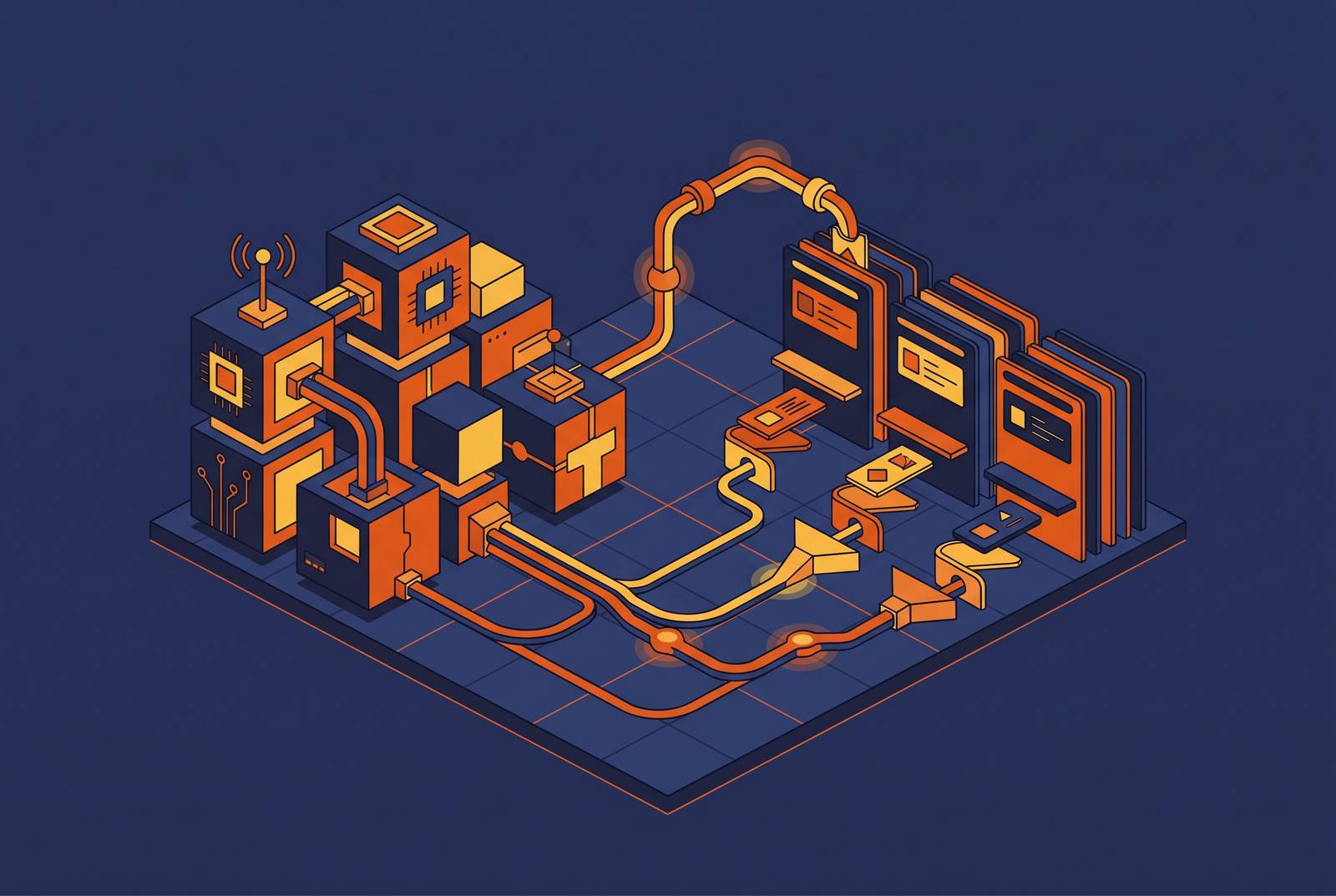
The complete workflow connects a context-rich issue to an isolated cloud session with MCP evidence gathering, then submits the PR through automated quality gates. Native review in Linear keeps the change beside the original request, while full attribution supports the merge decision. That is the standard for successful task automation. The integration has closed the handoff only when reviewers can judge the result against the intent that started it.
Sources
- Now Linear writes the code, too - Linear
- The Work Behind Delegation: A Framework for Supervising AI Coding Agents
- Coding sessions in Linear
- From Question Answering to Task Completion: A Survey on Agent System and Harness Design
- Harness Engineering: Anatomy, Architecture, and Evolution of Coding Agents -- A Source-Code Study of Eleven Systems