Multi-Agent Routing on a Single Cloud Platform When Claude Code Codex Cursor and OpenCode Each Own Different Task Classes
A task-by-task guide to which coding agent fits which job.
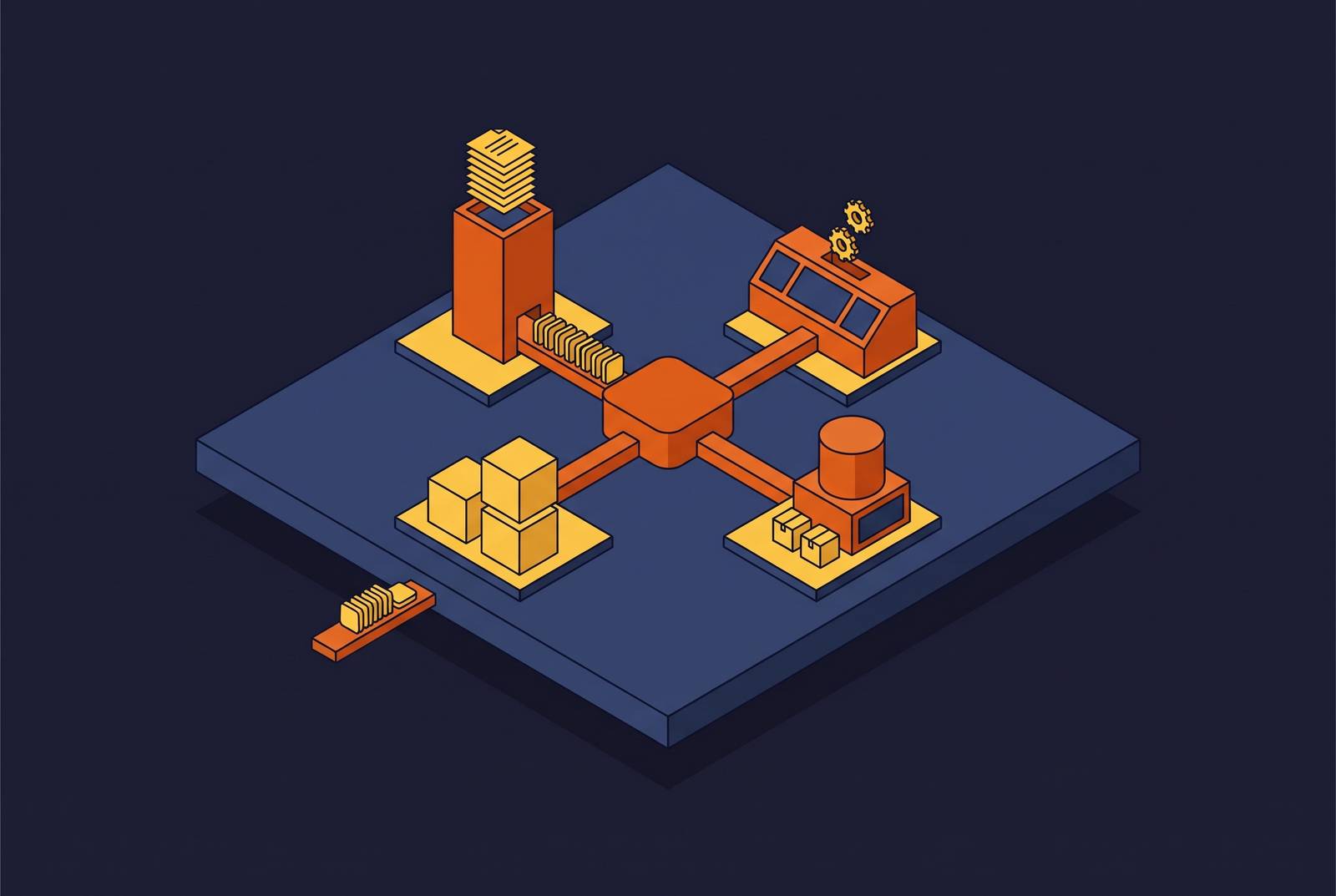
A multi-harness cloud coding agent platform gives Claude Code, Codex, Cursor, and OpenCode a shared execution and review framework without forcing them into the same role. Effective routing assigns deep-context work to Claude Code, autonomous tasks to Codex, IDE-native parallel work to Cursor, and cross-provider agent teams to OpenCode. The platform ties those choices together with isolated environments, shared project conventions, and attribution for every run.
Why engineering teams end up multi-agent before they plan to
Developers reach for different agents because their work changes shape. An inline edit, an autonomous implementation, and a large refactor place different demands on the tool. No single agent dominates all three categories. Teams end up with multi-agent workflows before they have a routing policy, so context gets stuck in individual sessions, conventions drift between tools, and handoffs break between developers.
The strategic mistake is “single-agent maximalism,” or treating one agent as the answer to every task. That confuses consistency of process with uniformity of tooling. Teams need to assign work without multiplying the processes around it. Architecture provides a firmer basis for that assignment than developer preference.
Architecture, not preference, determines which agent owns which task class
The four agents encode different definitions of the job. Claude Code formally distinguishes subagents from agent teams, giving it two levels of coordination. Codex organizes work around isolated VMs, parallel execution, and returned pull requests. Cursor organizes parallel agents around the file system and an editor-native interface. OpenCode organizes agent teams around provider-independent orchestration, including models from different vendors within the same team.
Claude Code fits work that is hard because it needs connected reasoning, while Codex fits work that can run on its own after dispatch. Cursor keeps parallel execution within the developer’s editing workflow. None of those advantages establishes a global winner, because each resolves a different constraint.
What Claude Code is built for — deep-context, cross-file architectural work
Claude Code’s 1M-token context window and Anthropic-model-only design suit tasks where understanding the codebase is the bottleneck. Cross-file refactors, architectural decisions, and complex debugging rely on links in the code that a narrow specification may miss. The engineer often needs to remain involved. In this setting, the agent’s role is to reason through a nuanced change rather than execute a settled instruction as cheaply as possible.
Its subagent model lets engineers divide that work through prompts that spell out the task and its scope constraints. A backend subagent, for example, can receive an instruction not to read a frontend file. That makes delegation a deliberate partition of context. Its MCP support also includes durable connection management and full tool-call traces in transcripts, although a native MCP registry remains unimplemented.
The routing boundary appears in the cost pattern. Claude Code consumes substantially more tokens per task than Codex, making repetitive or readily parallelizable work expensive to assign to it. That expense is easier to justify when a correct change requires codebase-wide reasoning. When the specification already resolves the hard questions, the task belongs in a different execution model.
What Codex is built for — async, parallelizable tasks you can dispatch and forget
Codex fits the opposite condition, where an engineer can hand off a clear specification and review a pull request later. Its sandboxed VM architecture makes asynchronous execution the default model. Git worktrees let separate tasks run in parallel without file conflicts during execution. Routine features, test generation, documentation, and well-defined bug fixes fit this arrangement because they can proceed without continuous clarification.
The sandbox is part of that operational fit. Codex uses Bubblewrap plus seccomp on Linux, with Landlock retained as a legacy fallback, Seatbelt on macOS, and restricted tokens on Windows. These tools set OS-level boundaries, which include filesystem and network isolation. With sandboxing built in and on by default, unattended execution has controls that go beyond making it easy to use. It does not remove the need to review the result.
A task that needs mid-execution steering or repeated interpretation is a poor fit for a handoff-and-return workflow. Where ambiguity requires sustained refinement with the engineer, Claude Code is the more appropriate destination.
What Cursor is built for — parallel in-flow work inside an IDE-native environment
Cursor fits engineers who want to run tasks in parallel while staying in their editing environment. Its dedicated Agents Window and cloud VM-per-agent model allow several tasks to proceed while the developer continues working. The defining requirement is continuity between editing, supervising agents, and examining their results.
Cursor’s February 2026 desktop-environment-per-agent upgrade gave Background Agents their own desktop and browser so they could visually check UI changes. That expands what an agent can inspect itself. Cursor also supports Anthropic, OpenAI, Google, and xAI models, making multi-provider selection available across its agents.
The choice of provider here is part of an IDE-native way of working. It does not erase the boundary around reasoning depth. Cursor’s evaluation scores are lower than Claude Code’s, so tasks that need an understanding of the whole codebase should go to Claude Code even when staying in the editor would be easier. Cursor’s distinct strength is parallel work within the developer’s active coding flow.
What OpenCode is built for — model-agnostic orchestration and cross-provider agent teams
OpenCode fits tasks where it helps to split the work among models from different providers. A team can combine an Anthropic model for planning with an OpenAI model for execution, or use a cheaper model for volume. Provider choice happens within the agent team itself. That differs from Codex and Claude Code’s single-provider designs, and from selecting models across Cursor agents.
The distinction concerns native support for cross-provider composition. Developers can route Claude Code to non-Anthropic models through gateways such as LiteLLM or OpenRouter, but Anthropic does not officially support third-party model proxies. OpenCode has cross-provider composition built into its architecture. Its event-driven auto-wake, append-only JSONL writes, and event-driven injection model also differ from Claude Code’s inbox-file communication approach and leader-centric polling.
OpenCode is built to enter broader team workflows. Reusable file-based Agent Skills, LSP/MCP/ACP extensibility, and an OpenAPI server support that role. These capabilities make it a distinct orchestration choice. They also make it the most operationally complex to configure. Teams with simple, single-provider requirements incur setup overhead without a proportional benefit.
The routing signals — how to read a task and assign it to the right agent
Context breadth asks how much connected code the agent must understand before changing anything. Work that needs broad cross-file reasoning goes to Claude Code. A clear specification with limited need for codebase-wide reasoning points toward Codex, or OpenCode when provider composition is also a requirement.
Autonomy tolerance asks how completely the engineer can withdraw after dispatch. A task that can return later as a pull request belongs with Codex, while iterative refinement points toward Claude Code. Interaction mode then distinguishes active editor work from terminal-first or fully asynchronous execution. Cursor fits parallel work with visual inspection inside the IDE, whereas Claude Code and OpenCode fit terminal or command-line-first work. OpenCode is the choice when one agent team needs to mix vendors.
These questions need not create a new briefing process. Repo-root AGENTS.md supplies project conventions to Codex, Cursor, and OpenCode without additional setup, while CLAUDE.md supplies Claude Code-specific context. Keeping both up to date lets teams switch agents without briefing them again. Parallelization still requires a separate resource check, because worktree isolation is partial. Teams should not parallelize tasks that touch the same ports, databases, or caches merely because the agents edit different working trees.
Why a shared cloud environment makes multi-agent routing coherent at team scale
Routing becomes dependable across a team when agents run in isolated, fully configured environments under team control. The Git worktree is the central file-isolation primitive. Each agent gets a linked working directory, private index, and branch, while the working trees share one underlying object store. Uncommitted edits remain invisible to other working trees, and index locks do not contend.
A local workspace suits read-only analysis, Git worktrees suit implementation within one repository, and Docker suits tasks that touch external systems or span multiple directories. File isolation through a separate branch alone does not provide runtime isolation for a database or cache.
Pre-loaded dependencies and tooling let agents install packages, run services, drive a browser, and test their own work. Thin or misconfigured environments instead produce inconsistent output. A multi-harness platform must also attribute every minute of execution to its source, harness, model, and credential. Without that accounting, the team cannot establish whether its routing choices improve outcomes.
Dispatch and review need to stay within the team’s existing tools. A separate agent dashboard may expose execution, but routing creates team-wide value when engineers can initiate work from Slack or Linear and review it through GitHub or GitLab. Slack can provide the entry point through @Linear in any channel, with workspace-aware intelligence. Engineers can direct agents to recommend code, open pull requests, and manage tasks there, with each action tied to a specific authorized user.
Codex returns a pull request, Cursor Background Agents push a branch, and Claude Code and OpenCode produce diffs. In a routed workflow, those outputs converge on the same GitHub or GitLab review process. Reviewers need not adopt a different process for each harness. The choice of agent can remain invisible to the review procedure while remaining explicit in attribution.
Review remains a bottleneck after dispatch becomes easier. Generating work in parallel does not establish that the resulting changes are acceptable. Attribution therefore needs to connect execution, including which agent ran, with review outcomes. That connection is what makes the complete workflow measurable.
What good routing looks like end-to-end — from task signal to merged PR
A well-scoped test-generation task begins with a specification that can stand without continuous clarification. Shared repository conventions provide its standing instructions. The engineer dispatches it to Codex through Slack or Linear, and it runs asynchronously in an isolated environment with the dependencies and tools needed to verify its work. The result returns as a pull request for the team’s normal review process.
A cross-file architectural refactor takes a different path to execution but goes through the same review process. It routes to Claude Code from a terminal or dashboard, with the engineer remaining involved as the change develops. Tasks that run in parallel while the engineer works in the editor go to Cursor Background Agents on cloud VMs. A task requiring cross-provider teamwork routes to OpenCode with credentials for the relevant models. Each path converges on a GitHub or GitLab pull request, where the change must pass review before merging.
The merged result completes the measurement loop. Attribution to the harness, model, and credential lets teams compare acceptance rates and cycle time by agent and task class, then adjust assignments as evidence accumulates. As models and pricing change, a harness-agnostic layer allows supported model choices to change without rebuilding the surrounding workflow. Reporting must span the whole routed system. That is how a team distinguishes a plausible routing rule from one that produces better outcomes.